16.10 Speech under surveillance states
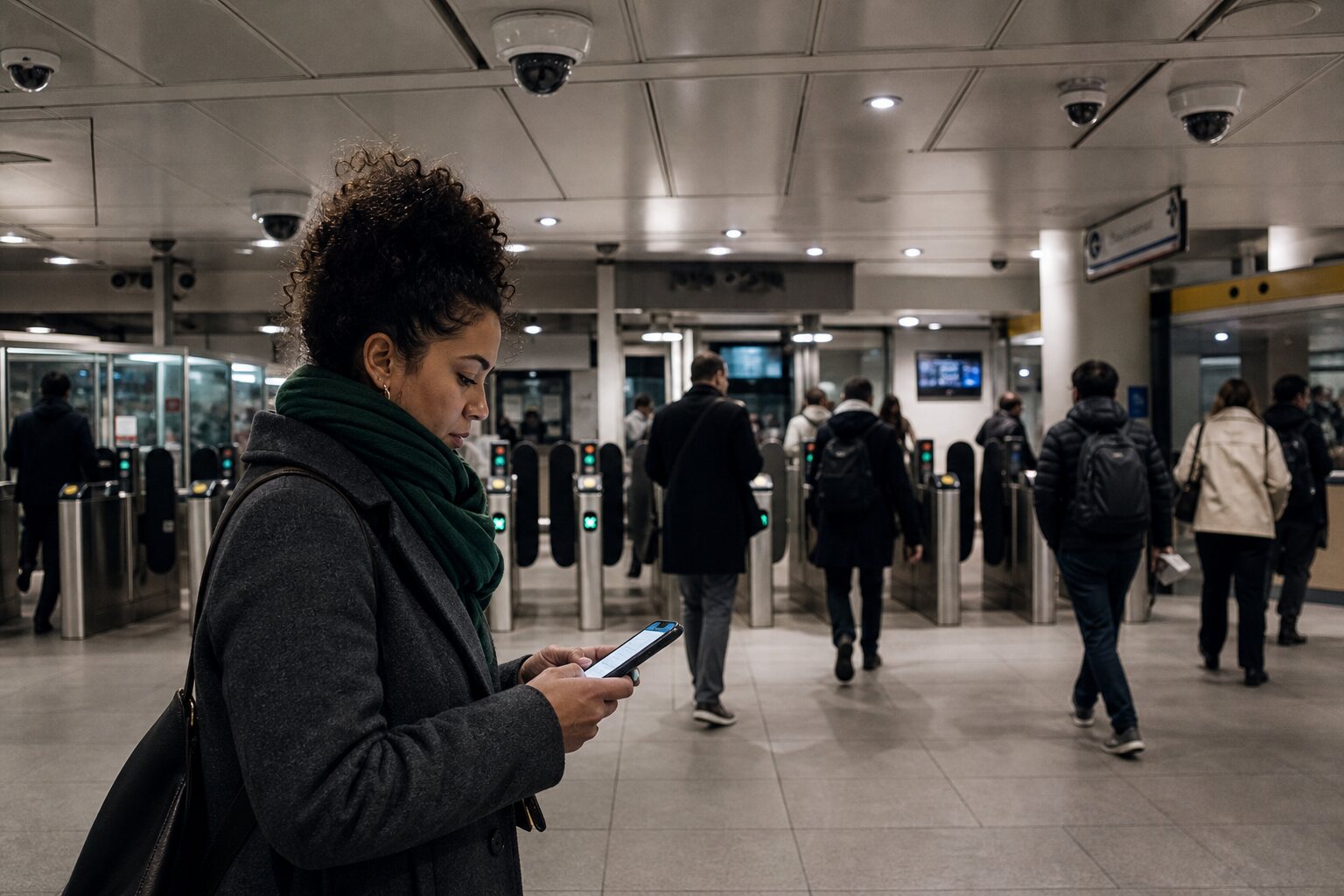
Legal speech and safe speech are not the same
In states with extensive monitoring, the line between what is legal and what is safe can be wide. “Legal” means permitted by law, enforced through courts and formal penalties. “Safe” refers to the likelihood that speech will avoid informal consequences such as harassment, job loss, travel restrictions, or pressure from local officials. In the UK context this distinction is less stark than in many countries, but it still exists: public protest and criticism are legal in most circumstances, yet the way speech is recorded and interpreted can affect how it feels to speak openly.
Surveillance changes the cost of speaking because it changes how speech can be collected, stored, and later reinterpreted. A statement made in a private group chat can be surfaced years later in a new context, or stripped of its original tone. A satirical comment can be treated as literal if the audience shifts. In a monitored environment, the risk is often not a courtroom but a chain of small consequences: difficulty renewing a contract, a cancelled venue booking, or a police visit that is framed as a “welfare check”. These outcomes may be lawful or discretionary, but they are not evenly distributed.
A common misunderstanding is that legality provides full protection. It does not. If a legal comment is likely to be misread, edited, or weaponised, it can still create personal risk. Another myth is that only “political” speech is risky. In practice, speech about religion, ethnicity, public health, or economic hardship can be treated as sensitive, and a sudden shift in policy can make yesterday’s safe topic today’s risky one.
Bait topics and how they work
Bait topics are subjects that draw out strong views and can be used to map networks, identify dissent, or build profiles. They are not always obvious. Sometimes they are framed as harmless banter, popular memes, or community gossip. In a monitored environment, a discussion that seems trivial can become a test of alignment. For example, a group chat about local rent prices might be used to identify organisers of a tenants’ union, or a thread about a foreign conflict might be used to identify journalists and activists who are later targeted by travel checks or online harassment.
There are also engineered bait topics. A public official might float a deliberately vague policy idea to see who objects. A journalist might be fed a rumour designed to identify leaks. In online spaces, coordinated accounts can provoke comments and then report them. These tactics rely on predictability: people answer impulsively, and their remarks are easily categorised. The more specific the response, the easier it is to attach a label to the speaker.
The risk is not merely “getting in trouble”; it is becoming legible to systems that are built to sort people. Legibility can be mundane — such as being flagged for extra screening — or serious, such as being considered a “risk to social stability”. The mitigation is not silence, but awareness. If a topic feels engineered to force a public stance, it is reasonable to pause or shift the discussion to a less exposed channel. You can also reduce the data footprint by avoiding one-to-many replies that are easily clipped and circulated.
The relevance to the UK
It would be both inaccurate and irresponsible to describe the United Kingdom as a surveillance state in the sense that this section's harder examples imply. It has independent courts, a free and adversarial press, genuine elections, and a population that can and does criticise the government in public without being disappeared. A reader should hold on to that, because overstating the case is not only false but counter-productive: it invites dismissal and dulls the ability to notice changes that genuinely matter. The reason this material belongs in a guide written primarily for a UK audience is not that the country has arrived somewhere terrible, but that several of the mechanisms described here — the durable record, the identity attached to ordinary activity, the gap between legal and safe — are being assembled domestically, in milder form, and deserve to be recognised early.
The developments set out in Chapter 17 are the concrete instances. A regime of age and identity verification makes more of online life legible to whoever can later request the records. Broad platform duties encourage the pre-emptive removal of lawful speech. Powers to compel access to encrypted data, and to record incidents that involve no crime, build exactly the kind of persistent, identity-linked trail that this section warns about in starker settings abroad. None of this is martial law, and treating it as such would be a mistake. But the difference between a free society and a quietly constrained one is often a matter of degree and direction, noticed in time or not at all. The habits of calibration, selective visibility, and quiet survival described here are therefore not exotic imports for use only under authoritarian rule; in moderate form, they are simply how a thoughtful person navigates a society where more is recorded each year, while that society remains, for now, genuinely free.
Quiet survival and selective visibility
Quiet survival is a set of everyday choices about when to be visible, when to be ambiguous, and when to be absent. It is not cowardice. It is a recognition that attention is a limited resource and that attention can carry risk. In many communities, people practise quiet survival by speaking in small circles, using local idioms rather than explicit slogans, and keeping activism tied to specific, practical aims rather than broad ideological claims.
Selective visibility can be a form of protection. For instance, a community group might publish a public statement about food bank deliveries but keep internal coordination off public platforms. A teacher might avoid public social media debates about government policy but participate in union discussions through established channels. These are not merely tactical choices; they are ways of managing exposure while still contributing to civic life.
Technology choices matter, but they are not magic shields. Encrypted messaging apps reduce the risk of interception in transit, yet they do not prevent a participant from forwarding a message or taking a screenshot. Cloud backups can be a silent leak. Device searches, either at borders or during routine policing, can expose conversation history even if network traffic is secure. In the UK, legal powers for device access can be broad in specific contexts, and the practical reality is that compliance is often pressured even when the law is contested. Understanding this makes it easier to decide what should be written down at all.
There are practical ways to reduce exposure without withdrawing from public life. Separating public and private accounts can limit accidental cross-links. Keeping sensitive discussions off platforms that index and search public posts reduces long-term discoverability. Avoiding real names in open forums can help, but it is not foolproof: metadata, writing style, and social graphs can still reveal identities. These mitigations reduce risk rather than remove it, and they work best when combined with a clear personal threshold for what you are prepared to be identified with.
Quiet survival also involves understanding how routines create patterns. Regular attendance at the same meetings, consistent posting times, and predictable travel can all make a person easy to track even without explicit identification. A small change — rotating meeting locations, varying public speaking roles, or using intermediaries for sensitive contact — can lower this risk. These practices are common in community organising and are often framed as basic safety rather than secrecy.
Living under surveillance is not a single, constant state; it fluctuates with events, policies, and local enforcement cultures. After a high-profile incident, speech can be scrutinised more harshly. During a political campaign, certain topics become flashpoints. In calmer periods, informal tolerance might expand. The practical skill is calibration: recognising when a statement is likely to be heard, by whom, and how it might be reused. That judgement cannot be automated, and it does not have a universal threshold. It is a mix of context, personal risk tolerance, and community norms.
Finally, restraint should be seen as a legitimate choice rather than a failure of courage. Some people are better positioned to accept risk due to their status, resources, or legal support. Others carry responsibilities that make exposure costly. A realistic approach to speech under surveillance states is to accept that there is no single correct posture. The aim is to speak where it matters, protect others who may be more vulnerable, and leave space for future action.